
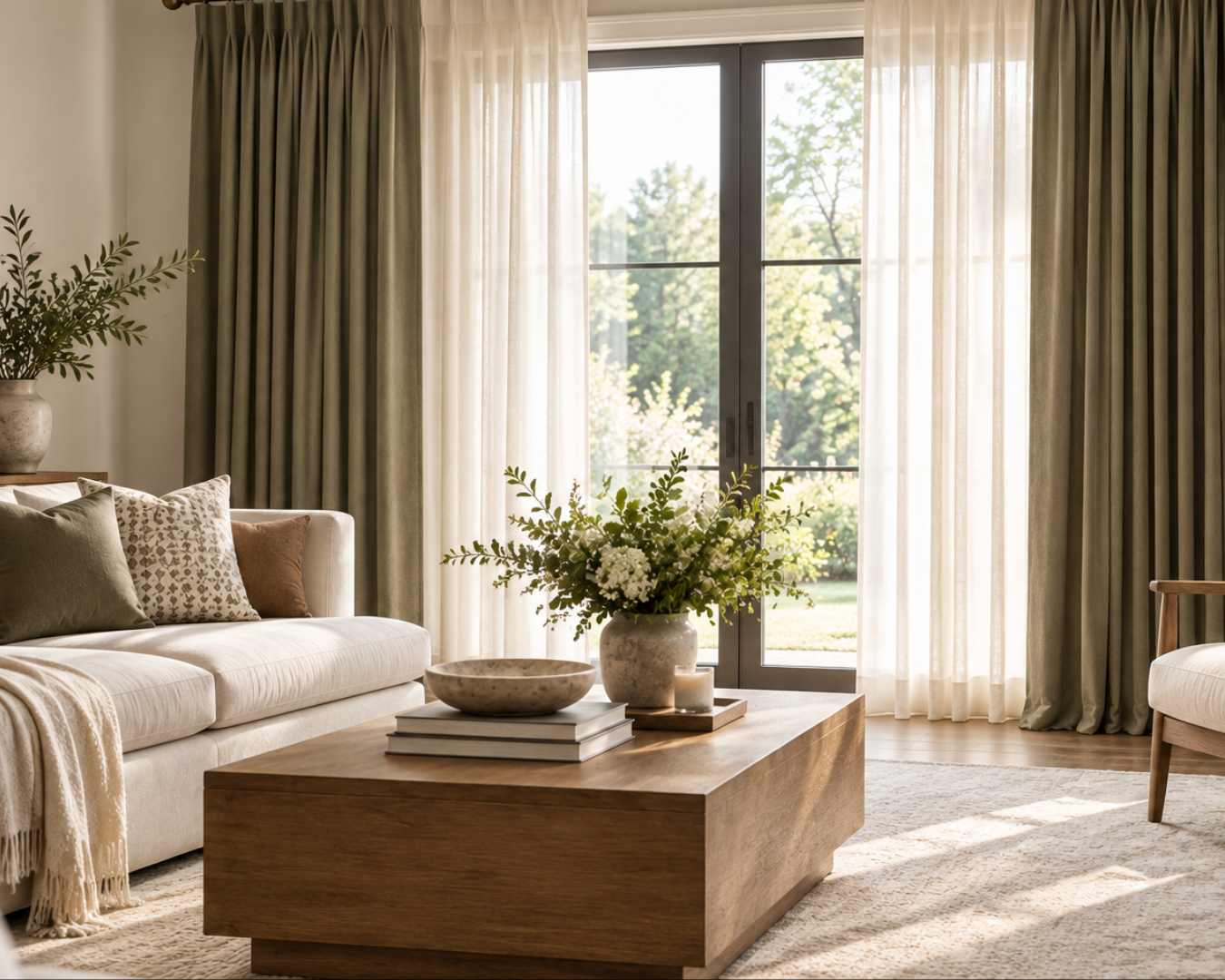
Layering window treatments can do more than add another layer of fabric to a window. Done thoughtfully, it gives designers greater control over light, privacy, texture, and proportion while creating a more complete composition.
The challenge is knowing which treatments belong together and how the hardware should support them.
At Vesta Drapery Hardware, we believe the most successful layered window treatments feel intentional from every angle. Each component has a purpose, and the hardware helps bring the entire system together.
Start With the Function
Before thinking about fabric or finish, consider what the window needs to do.
Does the space need privacy without sacrificing natural light? Is light control important throughout the day? Does the room benefit from added insulation? Or is layering primarily being used to introduce softness and dimension?
A common approach is pairing a sheer or light-filtering treatment with decorative drapery. The sheer can provide daytime privacy and soften incoming light, while the outer drapery offers greater light control and a more substantial decorative layer.
For bedrooms, media rooms, and other spaces where privacy and light control are priorities, additional layers can provide even more flexibility.
The important thing is that every layer has a reason for being there.
Think Beyond Fabric
Layered treatments aren’t only about combining textiles. The hardware becomes part of the design and, in many installations, part of the engineering behind it.
Multiple treatments require enough space for each layer to operate independently without interfering with the others. That means considering projection, mounting location, stackback, and clearance early in the specification process.
A double rod or multi-track system may be appropriate for some applications, while a more integrated system may make sense when a cleaner appearance is the goal.
The hardware should make the layering feel effortless.
Give Each Layer Its Own Role
One of the easiest ways to create a successful layered treatment is to give each component a distinct function or visual purpose.
For example:
Sheer: filters light and softens the view.
Decorative drapery: adds color, texture, and stronger light control.
Shade or blind: provides privacy and precise control.
The layers don’t need to compete with one another. In fact, they often work best when one is intentionally quieter.
A textured linen drapery might be paired with a simple sheer. A patterned outer treatment could be balanced with an understated shade. The goal is to create depth without making the window feel visually crowded.
When the Hardware Should Take a Back Seat
Not every layered treatment needs decorative hardware to be part of the visual statement.
When the fabric, architecture, or surrounding furnishings already carry plenty of interest, a quieter hardware choice can help maintain balance.
Apollo can be a natural fit for these interiors, offering a clean, understated direction that allows the layered textiles to remain the focus.
This approach can work particularly well in contemporary and transitional spaces where the goal is to create depth without introducing unnecessary visual weight.
When the Hardware Becomes Part of the Design
Layering can also move in the opposite direction.
In a room with more traditional architecture, decorative furnishings, or richly detailed textiles, the hardware can contribute another intentional layer.
Hunley offers a more decorative approach, making it an option when the hardware itself is meant to complement the character of the room.
Paired with a quieter inner treatment, a decorative rod and finial can provide a finishing detail that helps connect the window to the rest of the space.
The key is creating hierarchy. If every layer is competing for attention, the window can quickly feel busy.
For Softer, More Romantic Layers
Not every layered window treatment needs to feel substantial.
For rooms that call for softness, delicate textiles and lighter decorative details can create a more relaxed composition.
Brise Bise can complement this approach, particularly in interiors where the window treatment is intended to feel light, traditional, and slightly romantic.
Pairing softer window treatments with complementary hardware allows designers to introduce dimension without making the window feel overly formal.
Don’t Forget Stackback
Layering can change the amount of space the treatment occupies when it’s open.
With multiple layers of fabric, stackback becomes especially important. If the treatment stacks too far into the window opening, it can obstruct the view or reduce the amount of glass available for natural light.
Before finalizing the specification, consider:
- Window width
- Fabric fullness
- Number of layers
- Panel size
- Stackback location
- Available wall space
- Adjacent furniture and architectural features
Planning this early can make the difference between a layered treatment that operates beautifully and one that feels cramped.
Use Layering to Add Depth, Not Clutter
More isn’t necessarily better.
A successful layered window treatment should have a clear hierarchy. Maybe the sheer provides softness while the decorative panels provide color. Maybe the shade establishes a clean line while the drapery introduces texture.
When every layer has equal visual intensity, the window can quickly become overwhelming.
Instead, look for opportunities to create contrast in scale, texture, opacity, and movement.
A delicate sheer against a substantial linen. A tailored shade beneath relaxed drapery. A simple inner layer paired with a decorative outer treatment.
These relationships create depth without requiring every element to make a statement.
Let the Architecture Lead
The room itself should influence how much layering makes sense.
A room with detailed millwork, substantial furnishings, and decorative lighting may benefit from a quieter treatment. In a more minimal interior, layering can introduce softness and warmth without compromising the architecture.
Window proportions matter, too.
Tall windows may benefit from full-height drapery layered over a simple shade. Wide expanses of glass may call for a system that allows multiple panels to operate smoothly while preserving the clean lines of the space.
The best layered treatment works with the architecture rather than simply sitting in front of it.
Layering Can Change With the Light
One of the biggest advantages of multiple window treatments is flexibility throughout the day.
A sheer can soften bright morning light. A shade can provide privacy during the afternoon. Drapery can close in the evening to create a more intimate atmosphere.
This makes layered treatments especially useful in spaces where the desired atmosphere changes throughout the day.
The designer isn’t choosing one window treatment for one condition. They’re creating a system that can respond to several.
Specify the System Early
Because layered treatments involve multiple components, it’s worth thinking about the complete installation before the final hardware is selected.
Consider how each treatment will operate, where each layer will sit, how much space it needs, and how the finished window will look both open and closed.
Vesta’s range of decorative hardware and functional solutions gives designers options for creating layered treatments across a wide range of interiors. Whether the design calls for the understated character of Apollo, the decorative presence of Hunley, or the softer aesthetic of Brise Bise, the hardware can be selected around the treatment rather than added as an afterthought.
When Every Layer Has a Purpose
The best layered window treatments don’t feel complicated.
They feel considered.
Each layer controls something, contributes something, or solves something. The hardware allows those components to work together while supporting the larger design of the room.
Whether you’re combining sheers and drapery, pairing shades with decorative panels, or creating a more complex multi-layered installation, thoughtful specification is what keeps the final result cohesive.
At Vesta Drapery Hardware, our collections give interior designers the flexibility to layer function, texture, and design at the window.
Because sometimes the most beautiful window treatment isn’t one layer.
It’s how all the layers work together.