
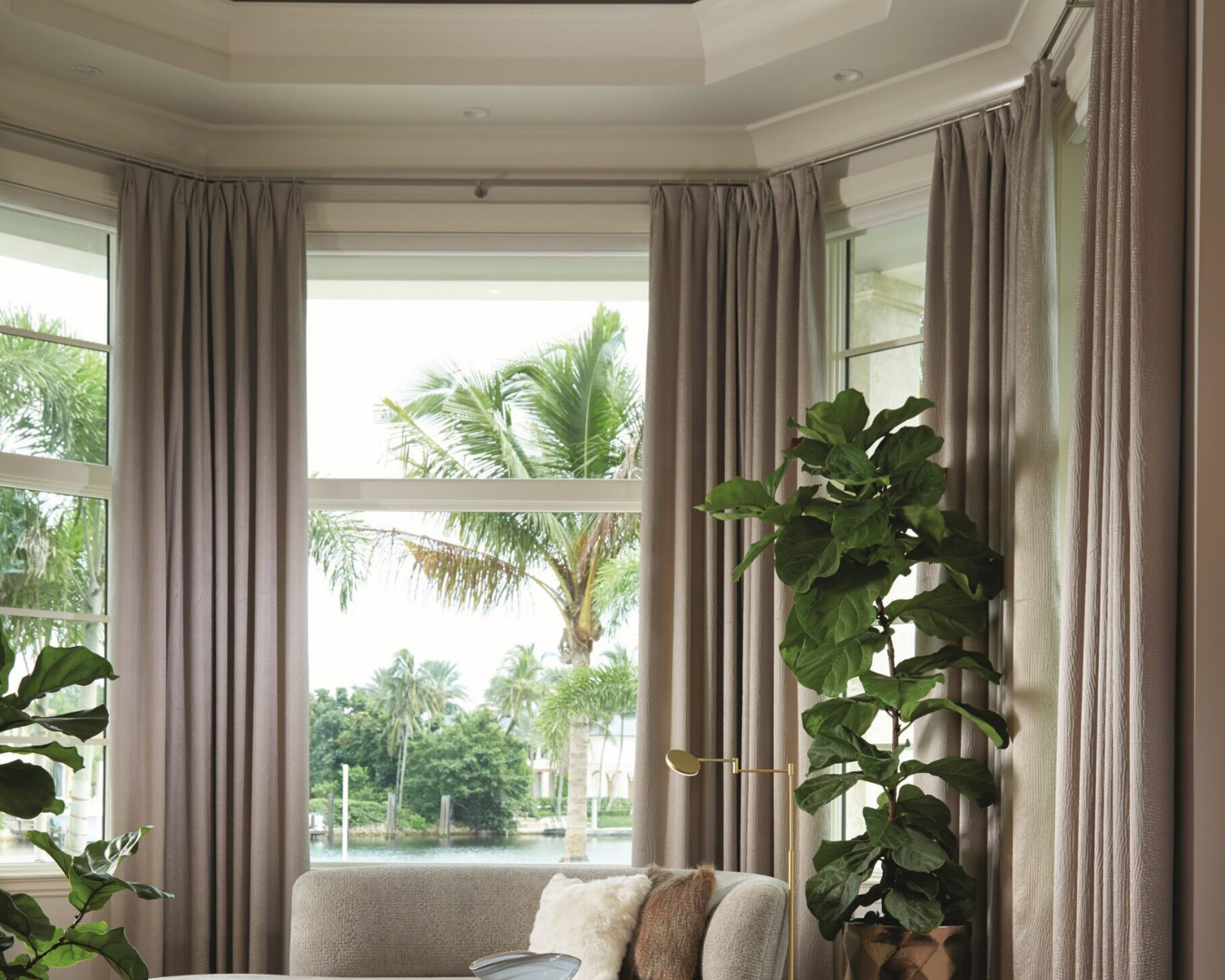
Not every window gets a clean, uncomplicated wall. Sometimes there’s a radiator underneath. Sometimes built-ins run right up to the casing. Sometimes the trim is oversized, the ceiling line is tight, or a nearby cabinet, beam, or shelf limits how far the drapery can project. And while these kinds of obstacles can make window treatments more challenging, they do not have to limit the design. With the right hardware, even the most awkward window can still feel intentional, functional, and beautifully finished.
At Vesta Drapery Hardware, thoughtful specification is what helps these trickier installations come together. Here are a few ways to design around built-ins, tight clearances, and other common window obstacles without compromising the overall look.
Start With the Obstacle, Not the Fabric
When a window has architectural limitations, hardware decisions need to happen early.
Before selecting fabric or deciding on fullness, take stock of what is happening around the window:
- Is there furniture or cabinetry directly below it?
- Are there built-ins or shelving close to the casing?
- Does the trim project farther than expected?
- Is there limited wall space on one or both sides?
- Will the drapery need to clear a radiator, bench, or ledge?
These details affect more than just placement. They influence projection, stackback, bracket style, mount type, and whether a rod or track system makes more sense. In these spaces, the most successful installations usually start with the hardware plan.
Use Projection Strategically
One of the most important tools in an awkward window situation is projection. If built-ins, deep trim, or a radiator sit close to the wall, the drapery may need to project farther out so it can hang and move properly without catching on anything behind it.
This is where longer brackets and bracket extensions can make a major difference. These types of components help create the clearance needed for drapery to fall correctly while keeping the installation clean and intentional.
Designer tip: Always account for both the obstacle and the fabric’s stack. A projection that clears the trim may still feel too tight once a lined panel is fully installed.
Consider Ceiling Mounting When Wall Space Is Limited
Sometimes the cleanest solution is to stop fighting the wall entirely. When a window is boxed in by built-ins, tight trim, or limited return space, ceiling-mounted hardware can create a more architectural look while avoiding side-wall limitations.
Ceiling mounting is especially helpful when:
- built-ins or shelving sit tight to the casing
- there is very little wall space above the window
- you want the drapery to visually elongate the room
- the goal is a cleaner, more integrated appearance
For designers working in tighter spaces, ceiling-mounted systems can often solve both the functional challenge and the visual one at the same time.
Use Track Systems When You Need More Flexibility
In rooms with obstacles, track systems often outperform decorative rods. Because tracks can mount more tightly, offer smoother movement, and create cleaner lines, they are often the best option when the architecture leaves little room for error.
Track systems are especially useful when:
- the drapery needs to bypass built-ins or cabinetry
- a window spans across a bench or radiator
- one-way draws are required because of furniture placement
- the hardware should feel subtle in a busy room
Designer tip: In tighter spaces, a cleaner track often gives the drapery more room to function well without visually crowding the wall.
Don’t Ignore Stackback
Stackback becomes especially important when wall space is already limited.
If drapery panels need to clear a built-in bookcase, cabinet door, or window seat, you need to know where the panels will land when fully open. Otherwise, even a beautiful installation can interfere with function.
Questions to ask:
- Will the panel block shelving or cabinet access?
- Is there enough return space for the stack?
- Does the client need the glass mostly uncovered when the drapery is open?
- Will one-way draw make more sense than a center split?
This is where a track system or a more tailored rod setup can make a huge difference in both performance and appearance.
Use the Hardware to Simplify the Visuals
Awkward windows often already have a lot happening around them.
Built-ins, millwork, shelves, ledges, and cabinetry all add visual weight. In those spaces, the hardware does not always need to make a statement. Often, the better move is to choose something that helps simplify the composition.
That might mean:
- a slimmer profile
- a quieter finish
- a ceiling-mounted solution
- a track that lets the drapery become the focus
- or a bracket choice that minimizes visual clutter
When the architecture is busy, the best hardware choice is often the one that makes the whole installation feel calmer.
Plan for Function First, Then Style
When a window has obstacles, function is what makes the design feel successful. A drapery panel that clears the radiator, stacks neatly away from the built-ins, and moves without resistance will always feel more polished than a more decorative option that fights the space.
That does not mean sacrificing style. It just means letting the hardware work harder behind the scenes.
At Vesta, that often means combining the right projection, bracket configuration, mount type, and track profile to solve the practical challenge first, then refining the finish and silhouette to match the room.
Smarter Hardware for Tricky Windows
Built-ins, radiators, deep trim, and tight clearances can complicate window treatments, but they also create opportunities for smarter specification. With the right combination of bracket extensions, ceiling mounts, and performance-driven track systems, even difficult windows can feel clean, intentional, and fully resolved.
At Vesta Drapery Hardware, we offer the tools designers need to solve challenging installations beautifully.